As rapid cost reductions for renewable energy technologies drive an energy transition across the globe, one fundamental question remains regarding a future powered by renewables:
“What about when the sun doesn’t shine and the wind doesn’t blow?”
Electricity storage is often positioned as THE solution to the problem of variable (i.e. not consistent) power generation from solar PV and wind power, but this view is exaggerated. There are other cost-effective measures available to integrate variable renewable energy into existing power systems. For example, a combination of different renewable energy resources like hydropower, biomass, geothermal or ocean power, can substantially reduce the effects of variability. A pro-active planning process, grid codes and investments in transmission and distribution networks also support the transition towards renewables-based power systems. These increasingly practical storage systems signal an important breakthrough as renewable energy becomes a mainstream part of the power mix.
The issue of storage is not new in the power sector. Conventional power plants rely on coal piles or tanks of natural gas, diesel, or LPG (liquid petroleum gas) to provide the necessary storage to match supply and demand. Nuclear power stations have been matched with pumped-storage hydropower stations, which use excess electricity to pump water into reservoirs, and reverse this process to generate electricity when it is needed again. Today, pumped-storage hydropower represents 99% of all global electricity storage capacity in place.
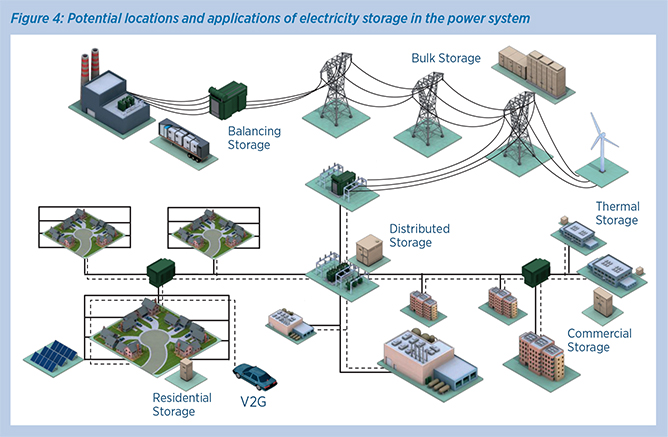
So why is electricity storage of interest to renewable power developers? Advanced electricity storage technologies, especially lithium-ion batteries, have fallen in price due to the resurgence of electric vehicles and fierce competition in the electronics industry. This has led to improved performance and costs for other electricity storage technologies. Consequently, renewable energy combined with electricity storage are challenging diesel generators as the most cost-effective power supply option. Advanced electricity storage technologies can also be located at any point in the grid infrastructure. This means that renewable power generation can be combined with local storage, as is the case with the six million solar home systems already deployed around the world in remote areas without grid connection.
In the next five to ten years, the declining cost of rooftop solar PV, combined with storage, will create a situation where consumers can start producing and consuming their own electricity more cheaply than buying electricity from the grid. Although this will not diminish the importance of grid infrastructure, it has called into question the existing models for utilities to recover their costs of maintaining and managing the grid.
Policy makers and regulators need to be aware of the potential disruptive effects of electricity storage on grid management — including its effect on the business models of utilities and grid operators. Utilities and grid operators can use demonstration projects to gain more experience with the impact of storage for managing renewables-based grids. Research institutes can create analytical tools to support decision-making. Industry will have to work on performance standards that reduce risks from a social, economic, and environmental perspective.
In this respect, a new technology roadmap from IRENA provides guidance for international cooperation among these different stakeholders to ensure that electricity storage strengthens the deployment of renewables. The new report provides clear direction on how to energy advance storage systems as part of the infrastructure for a sustainable energy future. Renewables and Electricity Storage prioritizes 14 action items across five priority areas where governments and industry can work together to facilitate the development of policies on electricity storage for renewables.