
Tag Archives: Africa

Renewables Key to Achieving Socio-Economic Development in Swaziland

Locally-generated renewable energy could reduce electricity costs, improve energy access and increase Swaziland’s energy independence.

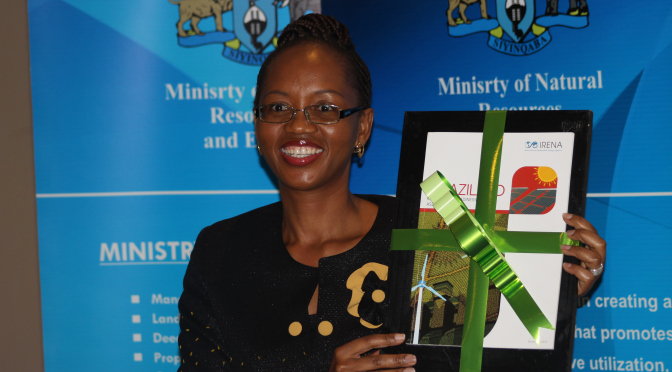
Developing Swaziland’s vast renewable energy resources would provide substantial socio-economic benefits for its population, according to a new IRENA report. The Swaziland Renewables Readiness Assessment estimates that bagasse, a by-product of the local sugar industry, could meet half of all domestic electricity demand while solar power could contribute substantially to the remaining demand.

More than 76 per cent of Swaziland’s current electricity supply comes from imports, predominantly from South Africa. Electricity import tariffs in Swaziland doubled between 2009 and 2012 and are expected to continue this upward trend. This, combined with the falling cost of renewable energy technologies, makes renewable energy more cost competitive in Swaziland than ever before.

“Renewable energy is no longer just the best choice socially and environmentally, it is also the best choice economically for many countries in many parts of the world. It has never been cheaper for Swaziland to reduce its electricity costs, increase its energy independence and improve energy access through the rapid deployment of renewable energy.” – IRENA Director-General Adnan Z. Amin.

Roughly 45 per cent of Swaziland’s population does not currently have access to electricity. The report estimates that the country’s solar resources, combined with the falling cost of solar PV, could bring electricity to more people through the deployment of decentralized solar PV systems.

Swaziland forms a key link in the Africa Clean Energy Corridor, IRENA’s initiative to meet Eastern and Southern Africa’s growing power needs sustainably and with a high share of renewables. As Swaziland is interconnected with Mozambique and South Africa, it could potentially use this existing infrastructure to develop more renewable energy than is needed for the country and sell its surplus power, moving it from an electricity importer to an electricity exporter.

Renewables Readiness Assessments (RRAs) offer a holistic evaluation of conditions for renewable energy deployment in a country, and outline the actions necessary to further improve these conditions. The Swaziland RRA recommends the country undertake various measures to support the implementation of renewable energy including: extending existing tax credits to the sugar industry to incentivize investment in more efficient equipment for bagasse-based power generation; conducting a detailed assessment of the economic potential of bagasse and solar resources; creating an enabling environment for renewable energy independent power producers; and developing a comprehensive grid code, amongst other recommendations.

“The RRA has been a useful tool for Swaziland as we embark on a domestic renewable energy programme. The RRA has assisted the Ministry in identifying renewable energy technologies that are ready for development and have potential for investment. The assessment also assisted in providing guidance and prioritization on those technologies that require further investigation.” – Swaziland Minister of Natural Resources and Energy, Jabulile Mashwama.

Since 2011, more than 20 countries in Africa, the Middle East, Latin America, the Caribbean, Asia and the Pacific Islands have undertaken the RRA process with IRENA to accelerate the deployment of renewable technologies domestically.
IRENA Examines the Socio-Economic Impacts of Renewables in the MENA Region

On the 19  January, 40 participants from the public and private sector came together with IRENA to discuss the socio-economic impacts of renewable energy, specifically in the Middle East and North Africa regions (MENA). The gathering in itself illustrates a change of focus in the field of renewable energy from the WHY to the HOW, with a growing interest in the social impacts of renewable energy deployment. As highlighted by Anita Richter of the GIZ, renewable energy advocates no longer need to place all their efforts into underscoring why renewable energy ought to be deployed, but rather how this should be done.

Deployment policies are only one part of the equation. The other factors, according to Barbara Breitschopf from Fraunhofer ISI, are the structures that support deployment and those that boost value creation. Just as support mechanisms for deployment ensure that renewable technologies can be integrated into the grid, value creation strategies ensure that renewable energy projects retain their social license to operate. The issue, however, as highlighted by Steffen Erdle from GIZ, is that the knowledge gained from previous projects has only been transferred from North to South and has yet to reach the MENA region.

To fully grasp the socio-economic impacts from renewable energy projects in the MENA region, we must solve one of the key structural issues in this field: data and knowledge transfer. IRENA has begun addressing this issue through the REvalue initiative, including the studies on the Water, Energy and Food Nexus and on the socio-economic benefits of solar and wind energy.

Several representatives from MENA countries agreed that efforts to maximise socio-economic benefits of renewable energy deployment can be strengthened through engagement with local institutions, particularly small and medium enterprises (SMEs). One suggestion involved building on existing SME relationships. Another point highlighted by the participant was the need for expanding capacity building initiatives and embedding renewable energy into education systems.

Another key issue brought forth from this discussion was the timeliness of projects and how this could impact the effectiveness of renewable energy deployment. It is important to consider that in the MENA region, where sustainability is for the most part in a nascent stage, countries may at the same time want to consider issues such as energy efficiency. In this manner, a country could reduce the level of energy demand and set up renewable energy projects in order to meet the planned share of energy from renewables. Overall, the participants concluded that detailed assessments should be carried out before any initiative is begun, in order to evaluate the readiness of a given country for renewable energy projects and determine whether other support policies are needed.

The last session discussed the methodologies and tools available that can be used to assess socio-economic impacts of renewable energy deployment plans. The panel concurred that to gather this information and implement effective policies, both the private and public sectors would need to be involved. Only in this manner, could the availability of data be improved and the added value of renewable energy deployment enhanced.

Africa’s Power Sector Needs Long-term Planning, Data & Collaboration

“I can see that Africa’s energy poverty is posing great challenges. Every time we think we are making progress, we have a power outage. It’s a painful thing to go through, and why do we? Lack of planning.” – Mahama Kappiah, Director General, ECREEE

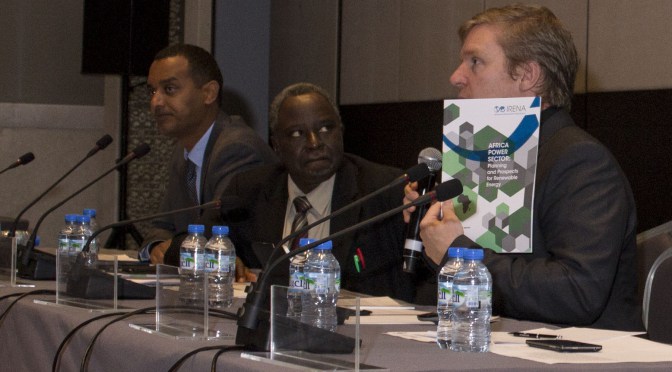
The need for, and solution to, comprehensive energy planning in Africa was the main issue discussed at a pre-Assembly event today in Abu Dhabi. African leaders and international organizations attended Planning Renewable Energy Strategies: Africa Power Sector, to discuss how best to improve energy access and security on the continent.

Speakers underscored the lack of adaptable, realistic energy plans for the continent, the need for more substantive data in the power sector and the lack of coordination between government and industry. Lack of planning often results in expensive short term solutions, which can have significant adverse economic impacts.

Accordingly, speakers proposed the use of updated data and tools in long-term planning, collaboration with academia and governments, and a commitment to capacity building. It was also discussed that master plans must be built on consensus across energy sector stakeholders to increase investor confidence and attract finance.

As one possible solution, IRENA presented its energy system analysis tools – the Systems PLAnning Test (SPLAT) models – that apply to all continental African countries and assesses long-term renewable investment. SPLAT models are built on IRENA’s renewable energy databases and linked with other IRENA tools to ensure the best data available. They can be used to prepare national long-term energy plans, the very need expressed during the event today.

In closing, event attendees proposed that IRENA, the International Atomic Energy Agency, and the KTH Royal Institute of Technology to collaborate and share their research and statistics in the future.

For more information on IRENA’s renewable energy data and statistics visit REsource, the new renewable energy “Google”.